

Six Projects Bringing Academia Closer to the Blockchain Ecosystem
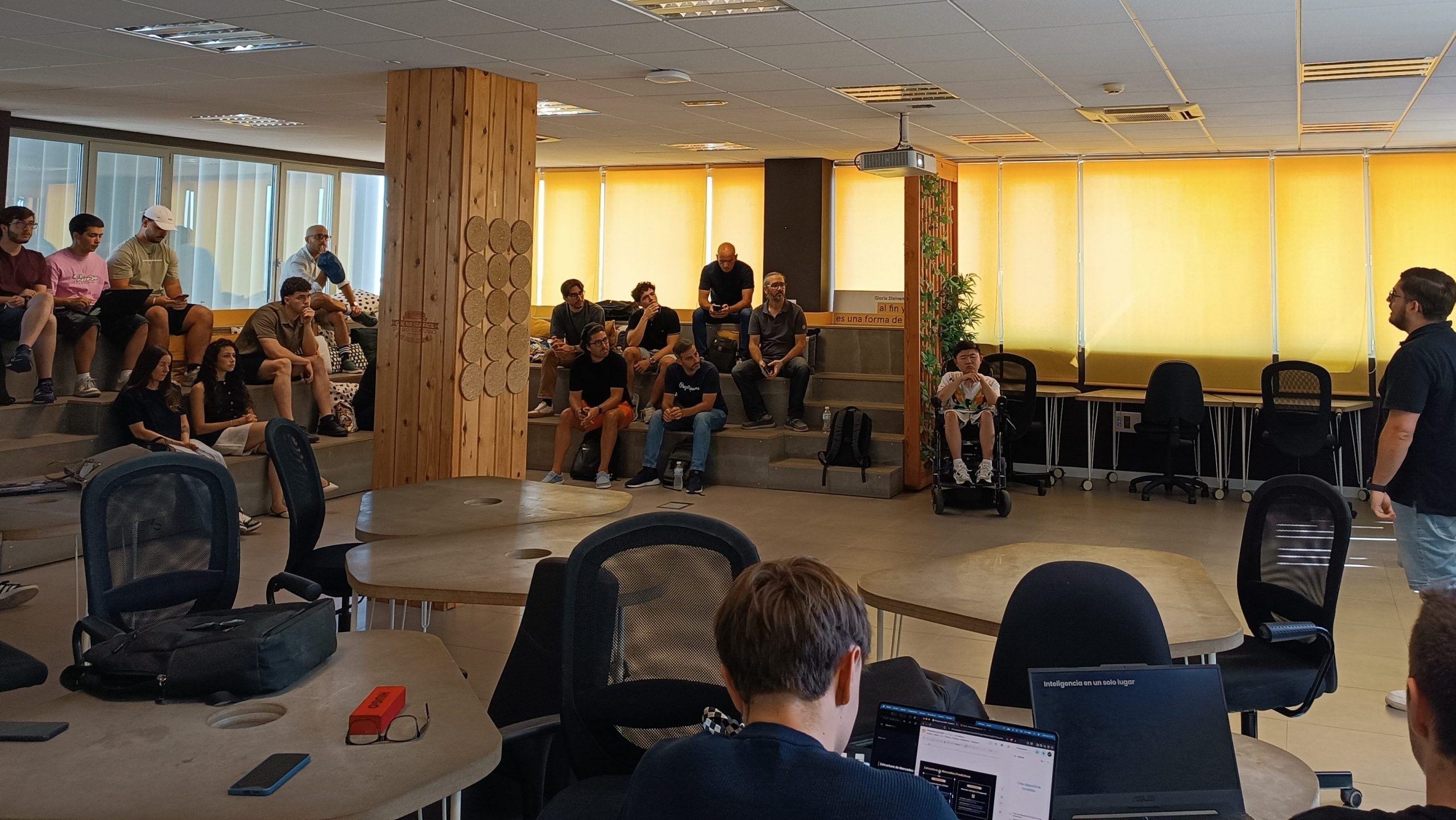
On July 9, we concluded another edition of the Blockchain Technologies course at the University of Málaga. We did so in the best way we know: by bringing together students, companies, mentors, and industry professionals to discover the projects developed over the previous weeks.
The closing event, held in the coworking space at The Green Ray, marked the culmination of a process that had begun much earlier. Throughout the course, eighteen students, organised into six teams, worked alongside professionals from Unknown Gravity, BuidlGuidl, Fortris, IOBuilders, GSR y Clovr Labs to address challenges connected to real-world use cases.
Each team had to understand a problem, research the available tools, make architectural decisions, coordinate with their mentors, and transform an initial idea into a prototype that could be presented and demonstrated publicly.
The result was six very different projects, covering areas ranging from tokenised bonds and digital inheritance wallets to prediction markets, artificial intelligence agents, NFT-based ticketing, and Lightning Network observability.
At Decentralized Security, together with NICS Lab and the University of Málaga, we are particularly proud to continue supporting an initiative that connects university education with the challenges and working practices of the professional ecosystem.
Six Challenges, Six Projects
During the event, each team had a few minutes to introduce the problem they had addressed, explain their main technical decisions, and demonstrate how their solution worked.
These were the projects presented:
Unknown Gravity – Eventra
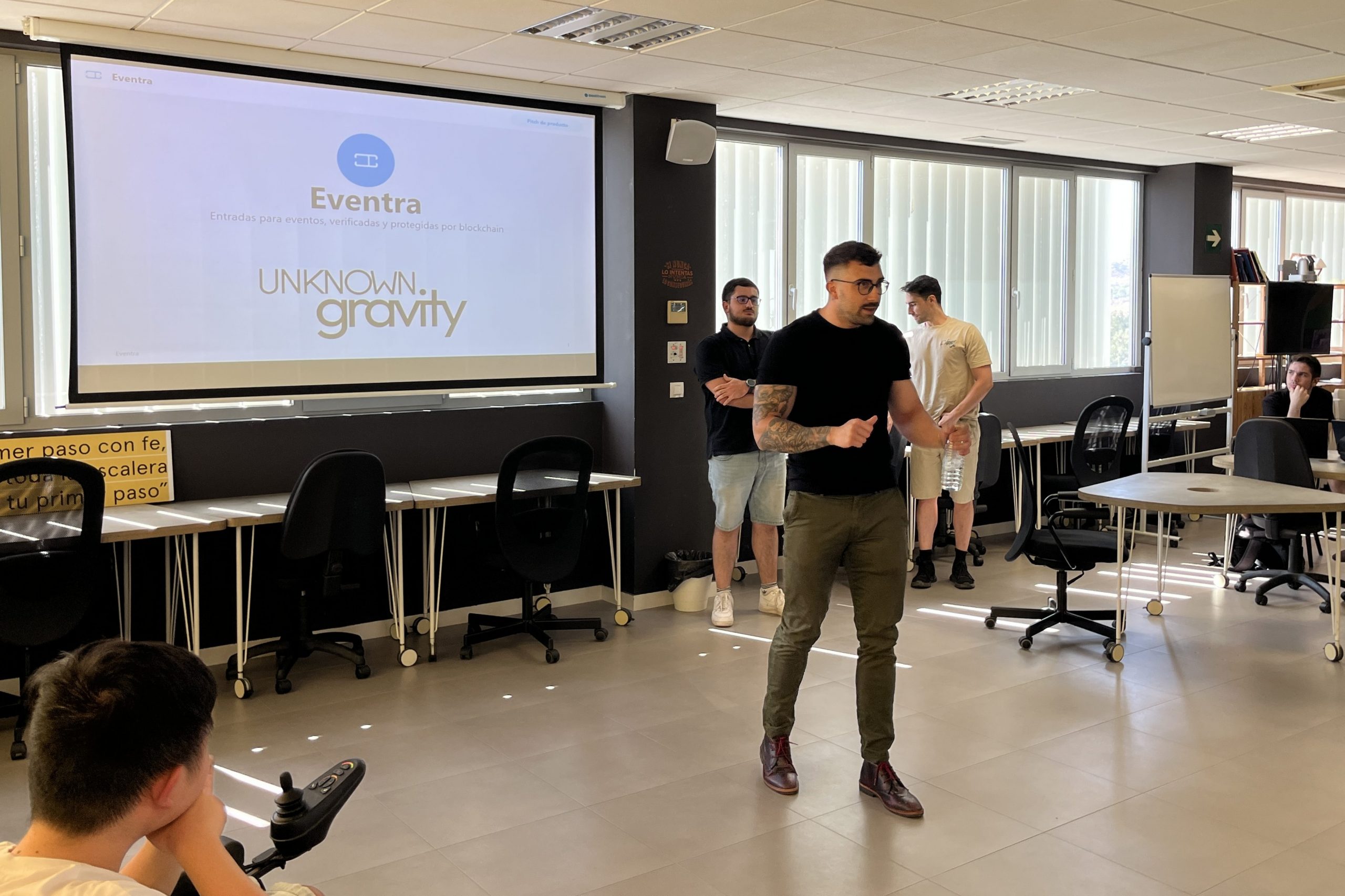
Rubén, Sergio and Luis Miguel, mentored by Jesús Sánchez and the Unknown Gravity team, developed Eventra, a platform for selling and reselling tickets that uses blockchain technology to provide greater traceability and verifiability throughout each ticket’s lifecycle.
The idea addresses a familiar problem in the events industry: once a ticket begins circulating on secondary markets, it can become difficult to verify its authenticity, trace its origin, or prevent certain fraudulent practices.
In Eventra, each ticket is represented as an NFT based on the ERC-721 standard. This means that the ticket is recorded on the blockchain and can be verified without relying exclusively on a database managed by an intermediary.
The platform distinguishes between three main roles. Event companies can create events and oversee ticket sales; buyers can purchase, transfer, or resell their tickets; and the platform owner can manage the fees generated by these transactions.
The project therefore explores how tokenisation can be used not only to represent a ticket, but also to build a more transparent and programmable secondary market.
BuidlGuidl – MarketplAIs
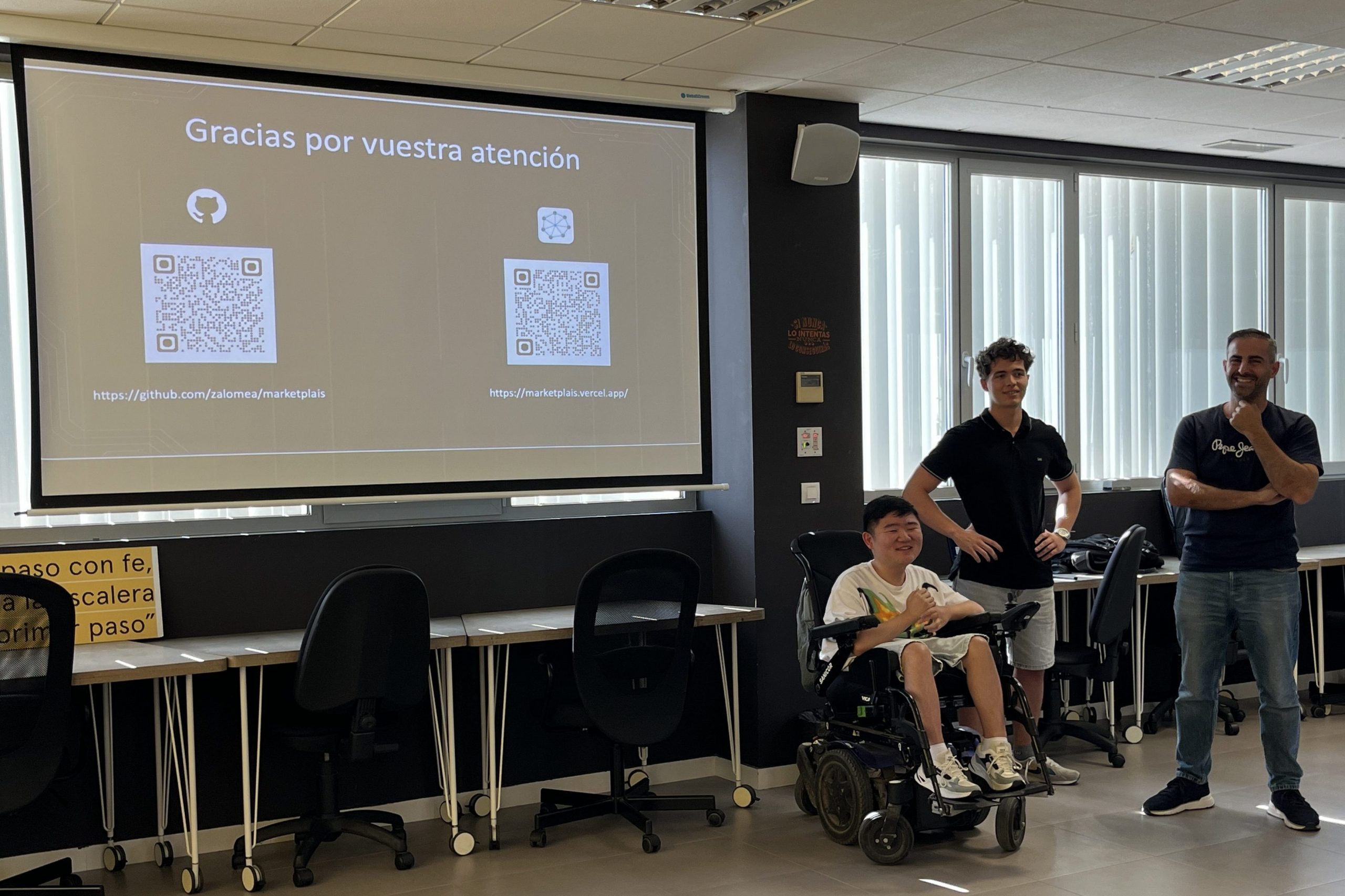
Yusen, Gonzalo and Alejandro worked alongside Carlos Sánchez from BuidlGuidl on MarketplAIs, a Web3 platform designed for publishing, using, and monetising artificial intelligence agents.
The project emerged at a time when autonomous agents are beginning to offer increasingly specialised services. However, developers still face significant friction when publishing an agent, charging users for access, and building a verifiable reputation around it.
MarketplAIs proposes an open marketplace in which any developer can publish and monetise their own agents. Users, in turn, can discover and use them, as well as view information about their activity and reputation.
The platform runs on Base, an Ethereum Layer 2 network, to reduce payment friction and introduce greater transparency into the transactions performed.
The result is a proposal that combines two of today’s most active areas of technological development: artificial intelligence agent systems and Web3’s open economic infrastructure. de inteligencia artificial y las infraestructuras económicas abiertas de Web3.
Fortris – Hereditary Wallet
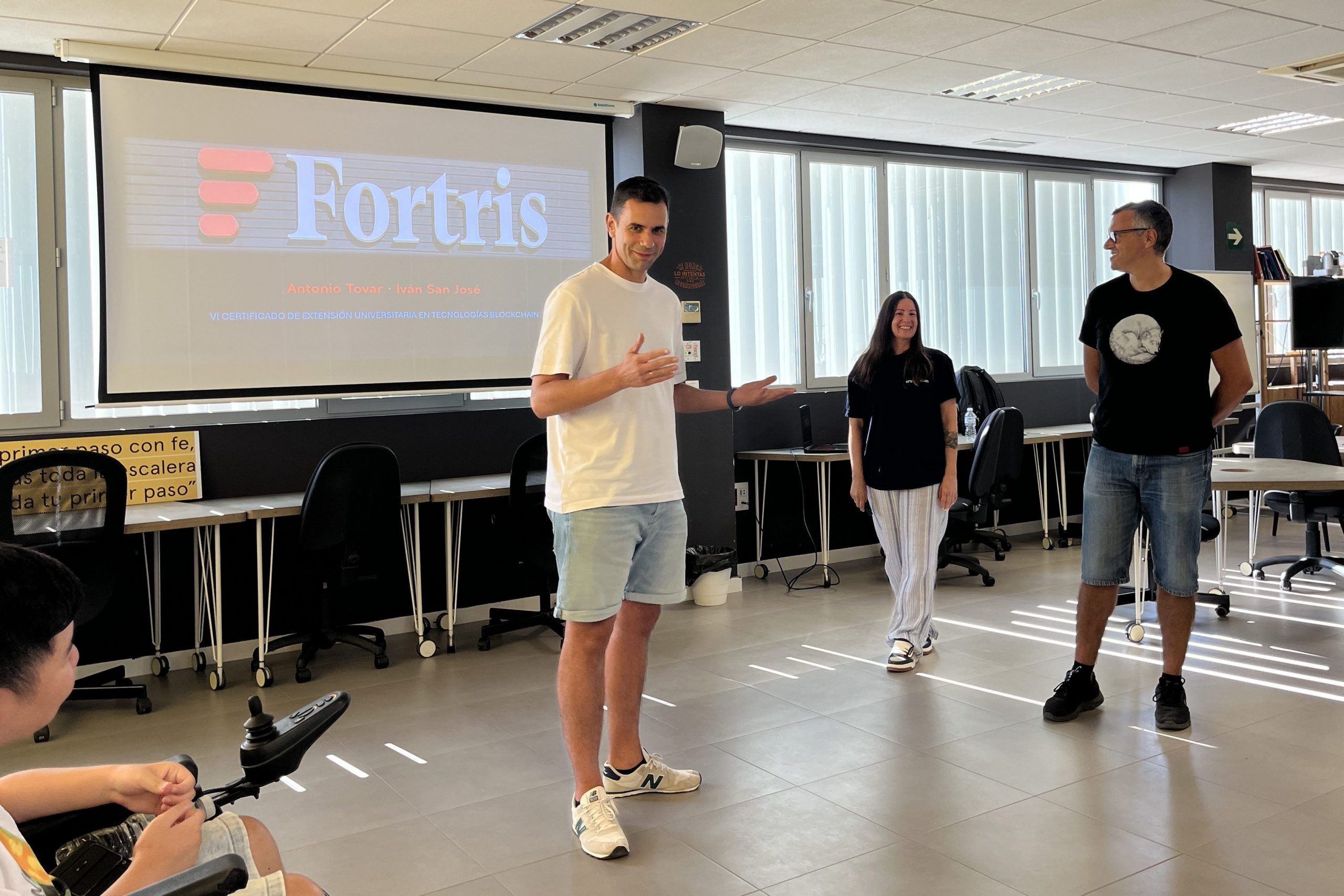
Martina with the support of Antonio Tovar and Iván San José from Fortris, developed Hereditary Wallet, a wallet designed to help users plan the transfer of their crypto assets.
Self-custody gives users direct control over their assets, but it also introduces an important problem: what happens to those funds when their owner dies or can no longer access their wallet?
Hereditary Wallet allows users to configure in advance how their crypto assets should be distributed among different beneficiaries. The proposal also incorporates a distribution model inspired by the three-part inheritance structure established by the Spanish Civil Code, bringing concepts from estate planning into the application’s design.
From a technical perspective, the project was built on Ethereum Sepolia, using account abstraction through ERC-4337. The implementation uses the ZeroDev SDK and Kernel v3.3, with Pimlico providing bundler and paymaster services.
The smart contracts were developed in Solidity and deployed using Foundry, while the user interface was built with Next.js and TypeScript.
In addition to addressing a complex use case, the project provided an opportunity to work with a modern smart account architecture, in which mechanisms such as paymasters can reduce the friction associated with transaction fees and improve the user experience.
IOBuilders – Digital Bond Platform
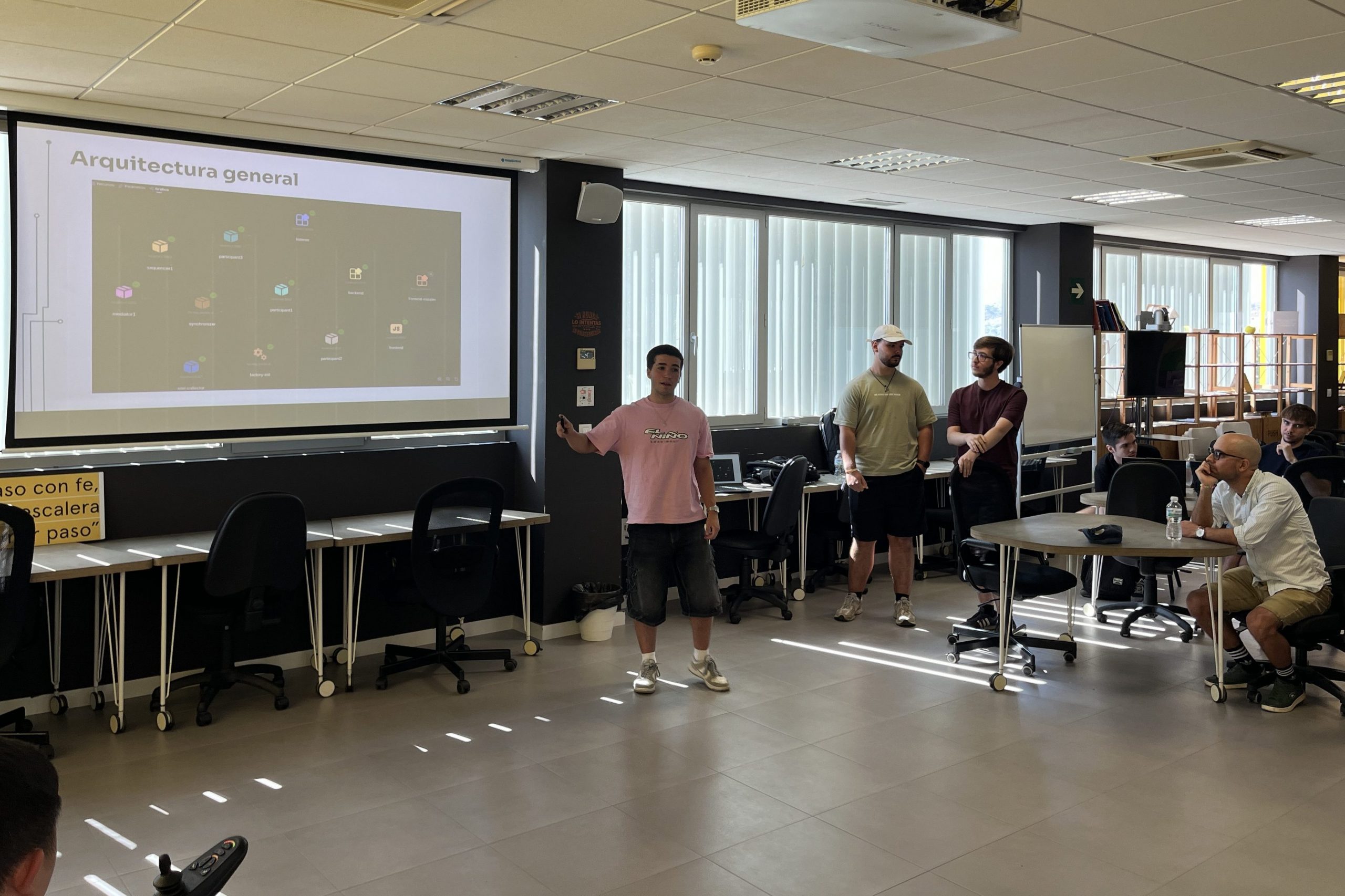
Roberto, Alejandro and Javier, mentored by Alberto Molina and the IOBuilders team, developed a comprehensive platform for issuing and managing tokenised digital bonds.
The project was built using Canton Network infrastructure and the Daml smart contract language, technologies designed for the creation of distributed applications in environments where privacy, interoperability, and permission management are particularly important.
The solution includes a Docker-based Canton network and a digital bond contract based on standard interfaces, including CIP-056. On top of this infrastructure, the team built a REST backend in Go, responsible for interacting with the Canton Ledger API, as well as a web interface for managing the complete bond lifecycle.
The platform supports operations such as issuance, two-phase transfers, bond redemption or burning, and settlement through Delivery versus Payment (DvP) mechanisms, in which the exchange of the asset and the payment are coordinated to reduce counterparty risk.
The team also incorporated real-time queries through WebSocket and an observability stack based on OpenTelemetry, making it possible to monitor the behaviour of the system’s different components.
The result was a project with a broad technical architecture, combining contracts, distributed infrastructure, backend and frontend development, and observability tools.
GSR – Market Intelligence
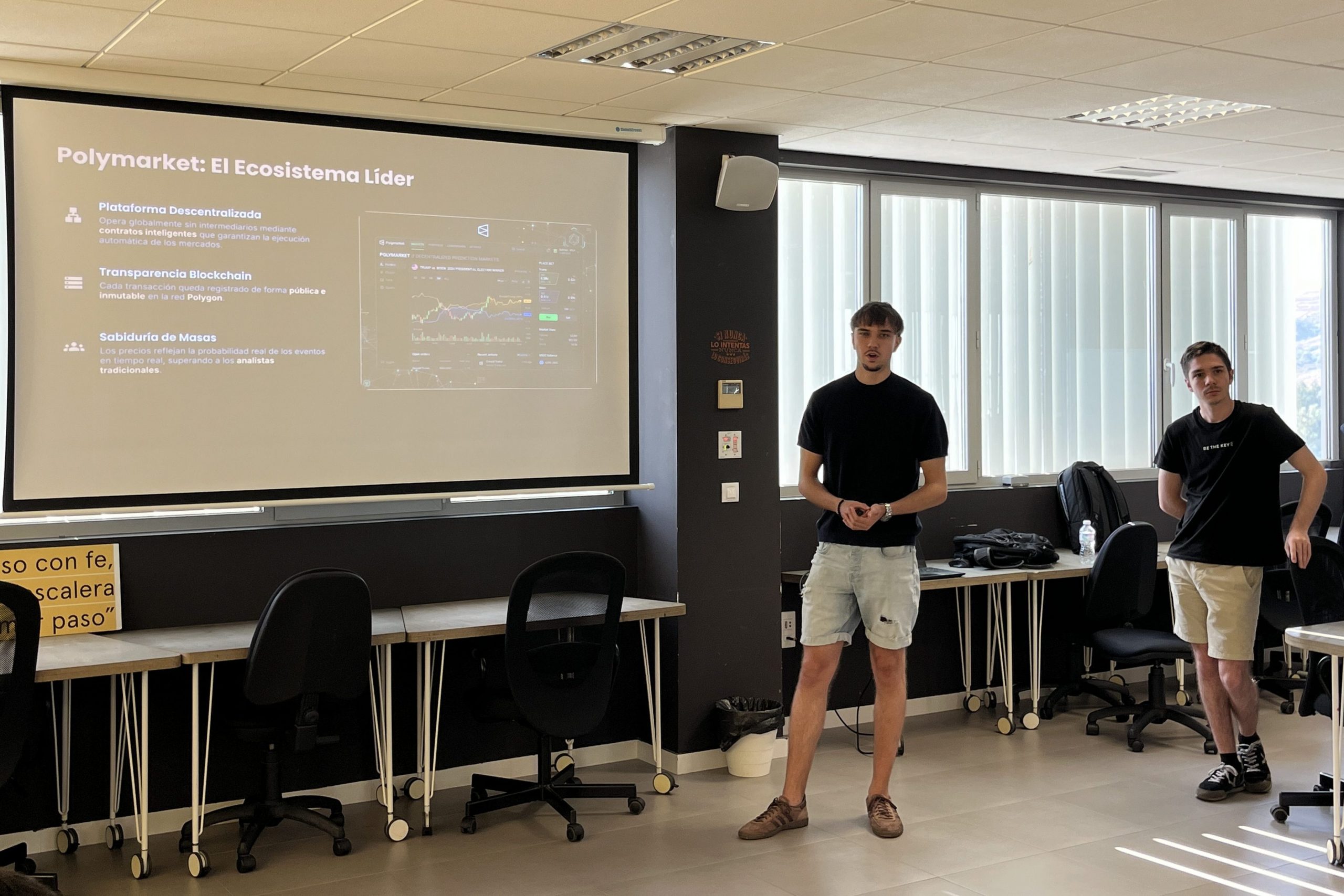
Pablo, Artur and Juan José, mentored by Francisco López and the GSR team, worked on a market intelligence platform focused on analysing Polymarket.
Conducting an in-depth analysis of a prediction market usually requires consulting numerous sources. Users may need to review the Polymarket interface, explore transactions on Polygon, check the status of the resolution process, analyse the activity of specific wallets, and compare market probabilities with news or external data.
The GSR project brings all this information together in a single web-based terminal designed for analysts and traders.
The tool makes it possible to examine market liquidity and monitor the complete resolution lifecycle of each prediction, including potential disputes handled through the UMA oracle.
It also compares market-implied probabilities with prices obtained from Chainlink and information published by external sources. In addition, it provides an aggregated view of the activity of leading wallets, helping users identify relevant movements and behavioural patterns.
The platform is not intended to interact directly with the markets, but rather to make them easier to interpret, monitor, and analyse. Its main value lies in gathering data that would normally be fragmented across multiple sources and presenting it through a unified interface.
Clovr Labs – Lightning Eye
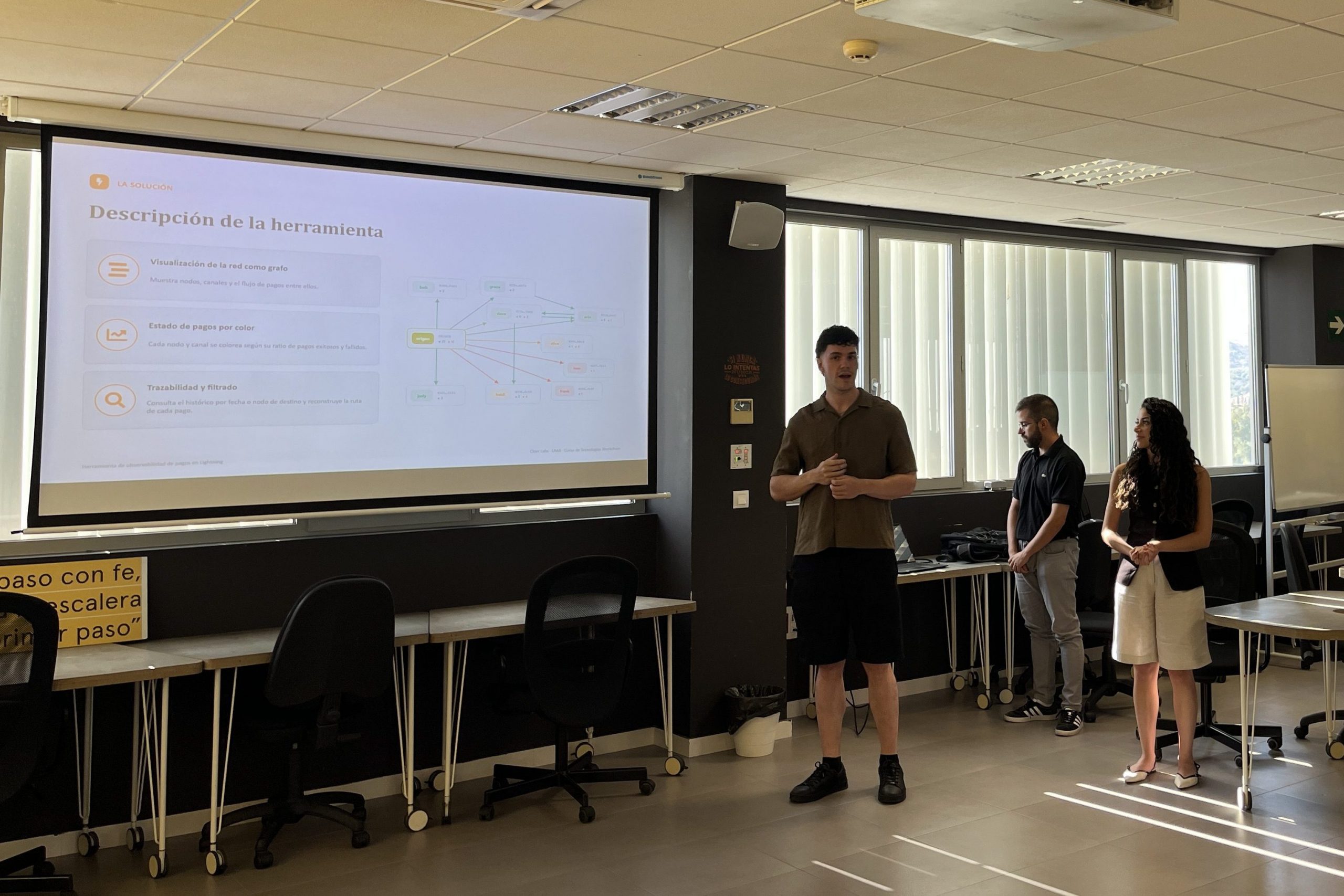
Iván, Julieta and Juan Manuel, with the support of Ismael Moreno, Aleksandar Yabalkarov and the Clovr Labs team, developed Lightning Eye, an observability platform for payments made over the Lightning Network.
When a Lightning payment is made, it may travel through several intermediary nodes before reaching its destination. For users and node operators, it is often difficult to determine which route the payment followed, where a failure occurred, or how the network behaved during the process.
Lightning Eye was created to provide precisely that visibility.
The team built a test network consisting of real Lightning nodes and developed a system capable of capturing payments and reconstructing the complete routes they followed. This information is displayed through a visual interface where users can inspect the network graph, follow each payment from node to node, and identify the points at which failures occur.
The entire environment is dockerised, allowing the infrastructure to be deployed and reproduced in a controlled manner.
The ultimate goal is to provide operators with a tool that helps them better understand their position within the Lightning Network, analyse the behaviour of their channels, and identify potential areas for improvement., analizar el comportamiento de sus canales y detectar posibles oportunidades de mejora.
Much More Than a Final Presentation
LaThe closing event provided an opportunity to showcase the results, but it also highlighted all the work that usually remains hidden behind a demonstration: decisions that had to be reconsidered, unfamiliar technologies that had to be learned, errors that had to be debugged, and architectures that had to be adapted as each team developed a deeper understanding of the problem.
The six projects also reflect the current diversity of the blockchain ecosystem. Ethereum, Bitcoin, Lightning Network, Base, Polygon, Canton, Daml, account abstraction, tokenisation, prediction markets and artificial intelligence all came together over the course of a single afternoon.
We would like to congratulate all the students on their work and thank the mentors and collaborating companies for the time they dedicated to supporting them. Their involvement is what allows the course to go beyond the classroom and become an experience that closely reflects professional practice.
We would also like to thank everyone who attended the event and took part in the conversations that followed the presentations.
We remain convinced that the best way to strengthen Málaga’s technology ecosystem is to create spaces where academia, research, and industry can work together.
We look forward to the next edition, with new challenges, new technologies, and, above all, new projects to build.